


Plywood
Jiangsu Dilun International Trading Company is a woodworking company founded in Xuzhou in 2011 and moved to Nanjing in 2019. We specialize in exporting plywood panels, kitchen cabinets & bathroom vanities, and furniture hardware. Since 2011, our products have been popular in the North American and European markets.
Our fully-owned factories are located in the beautiful city of Jiangsu in China. The production facility covers an area of more than 10,000 square meters and we employ over 200 employees. We have the latest advanced production equipment, which enables us to produce high-quality products at competitive prices.
At Jiangsu Dilun, we are committed to providing our customers with the highest quality wooden furniture and wood-based panel products. We strive to offer the best products at the most competitive prices. Our experienced staff is dedicated to providing our customers with the best possible service and value.
Professional team
Jiangsu Dilun International Trading Company is a woodworking company. We specialize in exporting plywood panels, kitchen cabinets & bathroom vanities, and furniture hardware.
Quality control
Jiangsu Dilun International Trading Company is committed to quality and excellence. The company follows a stringent quality control system to ensure all products meet the highest standards.
Advanced equipment
We have the latest advanced production equipment, which enables us to produce high-quality products at competitive prices.
Custom service
We also specialize in custom-made furniture and panel products, allowing our customers to design the furniture of their dreams. Our team of experienced designers and craftsmen is always available to help you create the perfect piece for your home or office.
-
![Poplar Plywood]() Add to Inquiry
Add to Inquiry -
![maple plywood]() Add to Inquiry
Add to Inquiry -
![Okoume Plywood]() Add to Inquiry
Add to Inquiry -
![Bintangor Plywood]() Add to Inquiry
Add to Inquiry -
![Pine Plywood]() Add to Inquiry
Add to Inquiry -
![Eucalyptus Plywood]() Add to Inquiry
Add to Inquiry
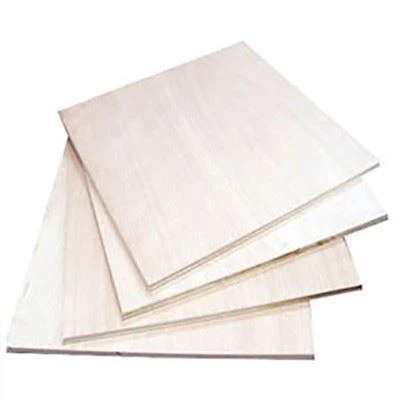


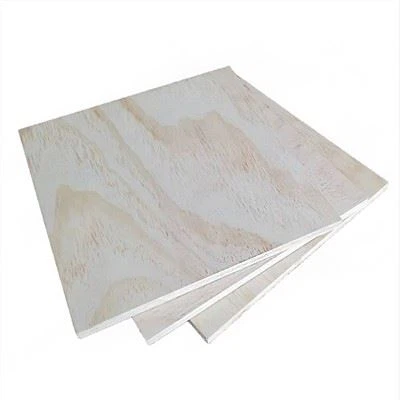
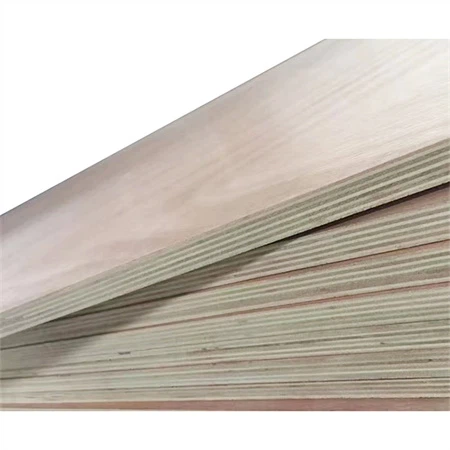
Plywood is a composite material manufactured from thin layers, or "plies", of wood veneer that have been stacked and glued together. It is an engineered wood from the family of manufactured boards, which include plywood, medium-density fibreboard (MDF), oriented strand board (OSB), and particle board (or chipboard).
Benefits of Plywood


Plywood looks great
Let’s start with what can be seen from the outside. Few people will argue against the fact that plywood looks really great. With plywood panel typically covered with solid wood, plywood looks just as great as real wood. It would look even greater if a good quality veneer is used.
Plywood is strong
If you believe that solid wood is strong, you are absolutely right. Plywood, however, is even stronger, whether you believe it or not. Whatever inherent issues with the strength of natural wood, plywood has arguably solved them all.
With the cross-grained nature of the structure of plywood, its strength is well and evenly distributed, while solid wood tends to be just stronger along the grain.
Plywood is durable
Unlike solid wood, plywood boasts of uniform strength along grains regardless of direction. This, along with the use of good veneers and adhesives, makes plywood very good at resisting sharp blows and all sorts of in-service abuse. That makes it a very durable product engineered wood product.
Plywood is lightweight
For all its strength, plywood is surprisingly so much lighter than solid wood. That makes plywood even more perfect for furniture-making. Heavier solid wood, meanwhile, can prove to be rather unwieldy when crafting furniture or when using it for other commercial applications.
Plywood comes in large sizes
Another of the many benefits of plywood. Would a single piece of solid wood be big enough to allow you to make furniture? Of course not. Standard plywood sheets, on the other hand, come in large sizes, with lengths of at least 1800mm and widths generally at 1200mm. You can certainly do a lot with engineered wood products of that size.
Plywood covers a much bigger area
Since plywood comes in larger sizes, it follows that plywood has it over solid wood when it comes to square foot coverage.
One standard plywood sheet alone would be big enough to make sure to cover an area of a certain size. There will be no gaps or uneven ends, and wastage will be very minimal.
Ply Wood doesn't split easily
One of the great disadvantages of working with solid wood is its tendency to split along the grain, especially when you try to drive a nail or screw through it. Plywood, however, doesn’t split that easily because of its cross-layered structure.
Plywood is great for curved surfaces
When was the last time you had it easy creating curved surfaces with solid wood? Probably never, but if you did try something like that, the results aren’t likely to be great. When you make curved surfaces using solid wood, the edges would probably be rather rough and uneven. Plywood, on the other hand, can be made to fit any curved surface smoothly and easily.
Plywood offers more value for your money
You can rest assured that when you use plywood for any project, there will be very little wastage. You can practically utilize every square inch of a standard plywood sheet. Because it’s light, transporting plywood also shouldn’t be a problem.
Best of all, the price of plywood will always be lower than that of solid wood. Plywood is a cost-effective engineered wood product, and that makes it even more popular among homeowners and builders these days.
Plywood is very eco-friendly
To say that plywood is one of the most environmentally friendly products created by man may sound a bit ironic, but it certainly wouldn’t be an exaggeration. Sure, plywood uses wood, but manufacturing a workable sheet requires lesser wood than, well, solid wood products.
That means more timber is conserved, and that makes plywood an eco-friendly product. This is extremely important, considering the worrisome state of the environment and the world in general today.
Types of Plywood
Softwood
This type of plywood is made using softwoods. Those include redwood, cedar and pine. You might assume, given the name, that this type of plywood is not quite as strong as some others, but that is not actually the case. In fact, many construction projects call for the use of softwoods in roof sheathing, exterior frame sheathing, and sub-flooring. If you are planning on building a doghouse or shed, softwood plywood is a great option.
Aircraft
Aircraft plywood is perhaps the most durable of all kinds. This plywood is comprised of hardwoods, such as birch and mahogany. Not only is it incredibly strong, it also is resistant to both moisture and heat.
Lumber core
This type of plywood is typically constructed using three plies. There are usually two thin veneers on both sides along with a thick core. The veneers on the outside are usually constructed with hardwood while the core is usually made from strips of wood that are adhered together using glue.
Hardwood
Hardwood plywood is typically made using walnut, birch, maple or oak. It typically has anywhere from three to seven layers of hardwood. The finish on this type of plywood is particularly strong given how manufacturers glue the layers together. All layers are glued together at right angles. This type of plywood is a great option for projects like building musical instruments (guitars), packing cases, and furniture. It is mostly used for those projects that call for particularly strong frames.
Southern yellow pine
Southern Yellow Pine (often referred to as SYP) is plywood made from a designated group of four ‘Yellow Pine’ trees that grow in the Southern United States. Southern Yellow Pine plywood has a distinct grain pattern and is known for its high density, strength and softness. It is best used for projects that simultaneously require durability and a beautiful appearance.
Exterior
Exterior plywood is marked by its properties that allow it to remain outdoors. It uses glue that is both weather- and water-resistant to keep the veneers together. This particular plywood is intended to handle all weather including rain and wind. That said, it is meant for maintaining a sturdy frame for a long time.
Marine
Marine hardwood is created using water-resistant exterior glue. It is one of the highest graded plywoods on the market and is known for being resistant to both mildew and mold. It is not treated with any chemicals, so it does not resist decay and rot.
Structural
Also known as sheathing plywood, structural plywood is used for its strength, particularly as it relates to building and framing. It requires the use of a very strong adhesive. This type of plywood is not that resistant to weather, though it is still used for outdoor projects, as well as interior ones. This plywood is usually a grade of C or D but does not go higher than that.
Overlaid
Overlaid plywood can be of either medium or high density. Those that are high-density use more resin than those that are medium density. Both types are durable and strong.
ACX
ACX plywood is typically considered quite high-grade, given its durability and strength. It is usually close to defect-free and can be used for projects that require lamination. This type of plywood is best used for projects that require a nice, defect-free appearance. This includes cabinets, shelves or other small furniture items.
Application of Plywood
Exterior wall sheathing:
Plywood is a common type of exterior wall sheathing. It is strong and durable and can provide a good base for finishes such as siding or brick. Plywood is also easy to install and is available in a variety of thicknesses to suit different applications.
Interior walls:
There are a few advantages to using plywood as interior walls. Plywood is strong and can support a lot of weight, making it ideal for hung items like shelves or heavy pictures. It is also moisture resistant, so it can be used in areas that might be subject to dampness or humidity, like bathrooms or kitchens. Additionally, plywood is easy to work with and can be cut to fit any space.
Roofing and flooring:
Plywood is often used as roofing and flooring due to its high strength-to-weight ratio, durability, and water resistance. Plywood is also relatively easy to install, making it a popular choice for do-it-yourselfers and professional contractors alike.
Construction material:
Plywood is a construction material made from thin sheets of wood veneer glued together. It is an inexpensive alternative to solid wood boards, and it can be used for a variety of applications, including floors, walls, and roofs.
Furniture:
Plywood can make for great furniture, depending on the style you are going for. It can be used for both indoor and outdoor furniture. If you are going for a more rustic look, plywood can be a great option. It is also relatively inexpensive and easy to work with. If you are looking for something a little more modern, plywood can also be a great option. It is lightweight and easy to move, which makes it a great choice for furniture that will be used outdoors.
Cabinets:
Plywood can be used to create cabinets for a variety of purposes. It is a relatively inexpensive material and can be easily painted or stained to match the décor of a room. Because plywood is a thin sheet of wood, it can be easily cut and assembled using simple tools.
DIY projects:
Plywood is an excellent material for DIY projects because it is strong, yet lightweight and easy to work with. It can be cut, drilled, and shaped to fit nearly any project need, and it is also very affordable. When working with plywood, be sure to use proper safety gear, including a dust mask and gloves, to protect yourself from wood dust and splinters.
Space shipping and aviation:
Plywood is often used as a material for space shipping and aviation because it is strong, lightweight, and easy to work with. Plywood is also a good choice for aircraft because it is moisture-resistant and easy to clean.
Ship construction material:
Plywood is a popular material for shipbuilding because it is strong, lightweight, and easy to work with. It is also relatively inexpensive. However, plywood is not as durable as some other materials and is susceptible to rot and insect damage.
Surfaces shaped curved, U, or folded:
Plywood is a versatile material that can be used for a variety of applications. It can be shaped into curved, U, or folded surfaces. It is also a strong and durable material that can withstand a lot of wear and tear.
Interior surface of the skating ground material:
Plywood is a good material for interior surfaces of a skating ground because it is tough, lightweight, and easy to clean. Plywood also resists moisture and mildew.
Different interior games stadium:
Plywood can be used as an interior game stadium for a variety of different sports. It is a cheap, durable material that can be easily customized to create a unique playing environment. Plywood can also be painted or stained to create a unique look for your game.
Selecting logs and conditioning
The entire plywood-making process begins with log selection. At this stage, both hardwood and softwood logs are carefully identified and segregated in terms of species and quality. The primary objective here is to find logs that would produce veneers with acceptable physical and aesthetic characteristics. Some of the more commonly used hardwoods and softwoods in making plywood are ash, maple, mahogany, Douglas fir, and select pine, cedar and spruce varieties.
Once suitable logs are selected, they are then made to go through a conditioning process to assure that good quality veneer is produced during the peeling process. This process usually involves spraying the logs with water.
Cutting and debarking
The next step in the plywood making process is to measure the conditioned logs for crosscutting. Once the logs have been cut to length, the bark will then be removed using a debarking machine. The debarking process also aims to improve cross-section roundness.
Peeling and clipping
Using a rotary lathe machine, the logs will be peeled into thin veneers. The veneers produced can come in the form of continuous sheets, or immediately clipped into a predetermined width and length.
Since the quality of the veneer is one of the single most important factors in determining plywood grade, veneers with visible defects are clipped off. As a result, clipping leaves some veneers with a smaller surface area. This, however, isn’t a problem, because these smaller veneers can be joined together to form standard 4×8 or 3×7 sheets.
Drying the veneer
As you can expect, the green veneers produced by the peeling process are typically wet or full of moisture. These must be dried to improve bonding.
Veneer drying is done by feeding the veneers into continuous or roller dryers at a controlled speed. These dryers produce heat from steam boilers that are fuelled by barks, discarded veneers, sawdust and other mill residues. Ideally, the moisture content of veneers should only be somewhere between six to 14 per cent by the time they make it through the other end of the dryer.
Composing the sheets
After properly drying and trimming the veneers, they are then composed into final 4×8 sheets. At this stage, they are also segregated as face, core or back veneers. The face is the surface that is to be used or seen. The back, as the term suggests, is the part that remains unused or hidden. The core, meanwhile, refers to the centre layer. The process is meant to make composing the plywood layout easier. The plywood layout, for its part, will be controlled in terms of thickness, timber grain orientation, wood species, and the quality of the ply.
Bonding using adhesives
Once the sheets are properly composed, they are then bonded with the use of adhesives. The adhesives to be used at this point will depend on the type of plywood being produced. If the plywood is meant to be of the general or normal type, urea formaldehyde resins are typically used. Marine plywood, on the other hand, uses melamine or phenol-based adhesives.
To make sure the adhesive is evenly spread on alternate layers of veneer, mills pass the veneers through a mechanical glue spreader.
Then each veneer sheet or ply is bonded to another sheet in odd-numbered layers. Each sheet is also rotated to a different angle before being bonded to another. This creates a “cross-graining” that results in much stronger plywood.
Cold press, then hot press
The composed panels are then pre-pressed in a cold press at an ambient temperature and a controlled hydraulic pressure. This process usually takes 20 minutes, which is enough time for the adhesive to solidify and effectively bond the veneer plies in each panel. Aside from helping with bonding, this process also helps flatten the plywood.
To assure excellent bonding, the pre-pressed panels will then be put into a hot press. This process takes approximately three to seven minutes, although the time—As well as the temperature—may vary depending on the wood species, the veneer thickness and the design of the plywood.
All of this creates a much denser finished material. The thickness of the final plywood is determined by the number of veneer layers compressed.
Quality check
After the pressing process, the panel is ready for quality control. Samples will be randomly picked and tested for mechanical strength, bonding strength as well as formaldehyde emission levels. A visual check will also be performed, and should there be any gaps, they will be filled with putty.
Sanding and trimming
Once the plywood passes quality control, it will then be sanded to make sure the surface has a smooth surface and its thickness uniform. Depending on market specifications, the plywood can either be sanded on the face side or both face and back sides. After sanding, the plywood will then be trimmed to its final size.
Process of Plywood
Regular cleaning
Dust and debris can accumulate on plywood surfaces over time.
Regularly dusting and cleaning with a damp cloth can prevent dirt buildup and maintain the wood’s natural shine.
Avoid water exposure
Plywood is vulnerable to damage from excessive moisture. To prevent warping or delamination, avoid prolonged exposure to water.
Clean up spills promptly, and use coasters or mats to protect plywood surfaces from water rings.
Protect from direct sunlight
Prolonged exposure to direct sunlight can lead to fading and discolouration of plywood.
Consider using curtains, blinds, or UV-resistant finishes to shield plywood items from harsh sunlight and preserve their original colour.
Use furniture wax or polish
Applying furniture wax or polish helps protect plywood surfaces and enhances their lustre.
Be sure to choose a product suitable for plywood and follow the manufacturer’s instructions for application.
Address scratches and dents
Use wood filler or touch-up markers to address these imperfections and maintain a smooth surface. Sanding may be required for a proper finish.
Proper storage
Store plywood items in a controlled environment with stable humidity levels.
Avoid placing them in damp or excessively dry areas, as extreme conditions can lead to swelling or shrinkage of the wood.
Inspect for mold and mildew
Plywood is vulnerable to mould and mildew in damp conditions. Regularly inspect for any signs of fungal growth, especially in areas with poor ventilation.
Always clean the affected areas with a mild solution of water and vinegar.
Secure edges with sealant
Applying a suitable sealant or edge banding helps guard against moisture infiltration and enhances the overall durability of the plywood.
FAQ
We're well-known as one of the leading plywood suppliers in China. Please rest assured to wholesale cheap plywood made in China here from our factory. All customized products are with high quality and competitive price. Contact us for more details.
staining birch veneer plywood, veneer plywood wall panels, 4x8 oak veneer plywood