


Floating Bathroom Vanity
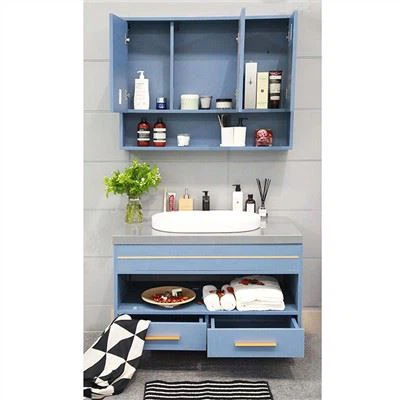
Because they are raised above the floor, floating vanities make bathrooms look larger and help lighten the space, making them a great option for smaller baths and powder rooms. Light is able to bounce off the floor below, which makes the space feel more expansive. It's also easier to clean around and under floating vanities.
When thinking about future functionality, remember that floating vanities can be designed for aging in place with space under the countertop for wheelchair accessibility. The wall-mounted design also provides more nuanced control over the height of the vanity.
Advantages of Floating Bathroom Vanity
It makes your bathroom look bigger.
Floating the vanity means the flooring can extend all the way to the wall, which instantly makes a bathroom appear more spacious. And a wall-hung vanity creates more usable space for stashing pieces like a wastebasket or a scale. A little foot room under the sink goes a long way.
It makes cleaning easier.
No corners! No awkward nooks! No place for dust bunnies to hide! Giving the vanity some breathing room means you can actually clean back there—way, way back there.
It’s perfect for the uber-organized.
If you’re one of those people who geek out over towel folding, love organizing your cotton swabs and can find your lipstick in under a minute, a floating vanity lets you display your storage zen with under-sink open shelving.
It can streamline the sink.
Achieve a modern flow by choosing a monochromatic wall/sink/floating vanity combo. In addition to an elegantly minimalist look, it will also show off your bathroom's other showstoppers, like a freestanding tub or gorgeous view.
It means more square footage for radiant heat.
If you're investing in radiant-heat flooring to keep your tootsies toasty, hang your vanity on the wall to maximize warmth where you stand at the sink. It might actually be a requirement; contractors often insist on floating or free-standing vanities in order to prevent overheating.
It can accommodate every height.
Standard vanities only rise so high, but floating vanities can soar at any height: Taller or shorter users can install a wall-mounted vanity at the height they like best.
-
![24 inch floating vanity with sink]()
24 inch floating vanity with sink
Add to Inquiry -
![30 Inch White Floating Vanity]() Add to Inquiry
Add to Inquiry -
![30 Inch Floating Vanity with Vessel Sink]()
30 Inch Floating Vanity with Vessel Sink
Add to Inquiry -
![36 Inch Floating Vanity with Sink]()
36 Inch Floating Vanity with Sink
Add to Inquiry -
![42 Inch Floating Bathroom Vanity]()
42 Inch Floating Bathroom Vanity
Add to Inquiry -
![48 Inch Floating Bathroom Vanity]()
48 Inch Floating Bathroom Vanity
Add to Inquiry




Our Factory
Jiangsu Dilun International Trading Company is a woodworking company founded in Xuzhou in 2011 and moved to Nanjing in 2019. We specialize in exporting plywood panels, kitchen cabinets & bathroom vanities, and furniture hardware.
Rich Experience
We strive to offer the best products at the most competitive prices. Our experienced staff is dedicated to providing our customers with the best possible service and value.
Our Product
We are proud to offer a wide range of products, including kitchen cabinets, bathroom vanities, wooden crafts, and plywood. We also specialize in custom-made furniture and panel products, allowing our customers to design the furniture of their dreams. Our team of experienced designers and craftsmen is always available to help you create the perfect piece for your home or office.
Our Service
We take pride in our commitment to quality, value, and customer service. Our goal is to provide our customers with the best experience possible and to ensure that they are completely satisfied with their purchases. We strive to provide our customers with the highest quality products while offering competitive prices.
A vanity is a bathroom cabinet with a countertop. The countertop itself contains openings for the sink and faucet fixtures, and it offers space around the sink for toiletries. The area below the countertop makes a convenient place for storing cosmetics and grooming products, cleaning supplies, and extra toilet paper rolls.
Standard bathroom vanities are generally available in the following widths (presented here in inches): 24, 30, 36, 48, 60, and 72.
When it comes to vanity heights, you won't find a standard height per se, but you will typically encounter vanities that average between 32 and 36 inches tall. When selecting a height for your bathroom vanity, keep in mind the people in your household who will be using it. If you have children, you may want to opt for a slightly shorter height to accommodate them.
The standard bathroom vanity depth ranges from 20 to 23 inches, with 21 inches being the average depth of a bathroom vanity. If you have a narrow bathroom layout, you can find shallow-depth vanities that range between 16 and 18 inches.
8 Tips to Choose the Right Bathroom Vanity for Your Space


Consider the size of your bathroom: The size of your bathroom will determine the size of the vanity you can install. If you have a small bathroom, a wall-mounted vanity or a pedestal sink may be a good option to maximize space. If you have a larger bathroom, a freestanding or double-sink vanity may be a better fit.
Decide between a Single vs. Double Sink Vanity: Choosing between a single and double vanity depends on your personal needs and preferences. If you have a small bathroom or only one person will be using the vanity, a single vanity may be sufficient. However, if you have a larger bathroom or multiple people will be using the vanity, a double vanity may be more practical. Double vanities can provide more counter space and storage, as well as separate sinks and mirrors for each user. Ultimately, the decision should be based on your specific needs and the available space in your bathroom.
Determine your storage needs: Think about what you need to store in your bathroom and how much storage space you require. If you have a lot of toiletries or towels, you may need a vanity with multiple drawers and cabinets. If you have less storage needs, a smaller vanity with fewer storage options may be sufficient.
Consider the style of your bathroom: Choose a bathroom vanity that matches the overall style and decor of your bathroom. If your bathroom has a modern design, with wall panels, look for a vanity with clean lines and a minimalist design. If you have a traditional bathroom, consider a vanity with decorative details and a classic finish.
Look for quality construction: Choose a bathroom vanity that is well-constructed and built to last. Look for solid wood or high-quality engineered wood construction, sturdy hardware, and a well-sealed countertop. Consider the material that best fits your style and sustainability preferences.
Determine your budget: Bathroom vanities are available at a range of price points. Determine your budget before you start shopping and look for a vanity that meets your needs within your budget.
Think about installation: Consider the installation process when choosing a bathroom vanity. A freestanding or wall-mounted vanity may be easier to install than a built-in or custom vanity.
Choose the sink type: There are several different sink types that can be used when customized a Vanity, including:
Undermount sink: This type of sink is mounted underneath the countertop, creating a seamless look and making it easy to clean.
Drop-in sink: Also known as a self-rimming sink, this type of sink is dropped into a hole in the countertop and has a rim that sits on top of the counter.
Vessel sink: This type of sink sits on top of the countertop and is often bowl-shaped. It can be made from a variety of materials, including glass, stone, and ceramic.
Integrated sink: This type of sink is built into the countertop, creating a sleek and seamless look.
Wall-mounted sink: This type of sink is mounted directly to the wall and does not require a vanity. It is a good option for small bathrooms or powder rooms.
When choosing a sink type for your vanity, consider the style of your bathroom, the amount of counter space you need, and your personal preferences.
BONUS TIP: Look into your plumbing needs: To determine plumbing needs before installing a bathroom vanity, you should first consider the location of the existing plumbing lines and fixtures. You will need to ensure that the vanity you choose is compatible with the existing plumbing and that the drain and water supply lines are in the correct location.
Popular Styles and Materials for Floating Bathroom Cabinets
Floating bathroom cabinets have become a staple in modern bathroom design, offering a sleek and space-efficient solution for homeowners. Understanding the various styles and materials available can help you choose the perfect vanity to elevate your bathroom's aesthetics and functionality.
Wood Varieties
Wood is a popular choice for its natural beauty and versatility. It can be adapted to suit various bathroom styles, from traditional to contemporary.
Common Types:
Oak: Known for its durability and classic look.
Walnut: Offers a rich color and smooth texture.
Teak: Valued for its water resistance and longevity.
Design Considerations:
Finish: Options range from glossy to matte, affecting both appearance and maintenance.
Grain Pattern: Each wood type has a unique grain, contributing to the vanity's overall look.
Concrete Countertops
Industrial Appeal: Concrete countertops bring a modern, industrial look to the bathroom and are praised for their strength and longevity.
Advantages:
Robustness: Highly resistant to scratches and general wear.
Versatility: Can be shaped and tinted to fit specific design needs.
Considerations: Concrete is heavy and may require reinforced cabinetry and wall mounting for support.
Marble Elegance
Timeless Beauty: Marble is a classic choice that adds a touch of elegance and luxury to any bathroom setting.
Benefits:
Unique Patterns: Each slab has distinctive veining, making every countertop one-of-a-kind.
Durability: Properly maintained marble can last for decades.
Maintenance: Marble is porous and susceptible to staining and etching, requiring regular sealing and careful use.
Innovative Design Elements
Sleek Door Panels: Flat or slab door panels are favored for their minimalist appeal, contributing to the floating vanity's modern look.
Integrated Lighting: LED lighting can be added beneath or inside the vanity for enhanced functionality and a contemporary feel.
Mirror Accents: Mirrors can be strategically placed to amplify light and create the illusion of more space.
Take Measurements
- Measure your bathroom beforehand to ensure the new vanity will fit. Keep common vanity sizes in mind, which are 18 to 72 inches wide.
- In addition, consider the type of vanity you're installing when measuring the bathroom. For instance, if you're installing a double vanity instead of a single one, you'll need more space for the plumbing and the width and length of a bigger vanity. Or, if you're installing a bathroom vanity with a counter, include measuring space for the countertop.
- To make it easier for yourself, get a pen and mark the new width and height for the new vanity.
Disconnect the Sink's Plumbing
To avoid making a mess when installing your new bathroom vanity, turn off the water supply at the sink or your main shutoff valve. The shutoff valves are in the cabinet beneath the sink.
Make sure to add a small bucket beneath the pipes to catch any water or other debris left in the plumbing after disconnecting the water.
Follow the steps below to turn off your water supply:
- Turn the hot and cold valves clockwise until you can't turn them any farther.
- Turn on the hot and cold faucet taps to empty the faucet lines.
- Remove the drain trap (also known as the P trap), and clear away any debris.
- Note: The drain trap looks like a U- or S-shaped curved pipe that comes down from the drain opening. To remove it, loosen the connecting nut using a hand or an adjustable wrench to remove it.
- After turning off the sink or main shutoff valve, you'll also need to disconnect the water supply lines.
- Make sure the valves are shut off and the faucet lines are emptied.
- Use a wrench to detach the top of the water supply line from the sink faucet.
- Hold the water line upright until you can dump it over into a bucket to release any remaining water.
- Use a wrench to loosen the nut at the base of the water supply line from the water supply valve.
- Wipe the valve connections dry and add fresh plumber's tape to prepare for the new water supply line connections after installing the new vanity.
Remove the Old Vanity
- With the plumbing disconnected and any water drained, you're ready to start removing the old bathroom vanity. But you'll need to do so with care to avoid ripping out any drywall or causing other damage.
- First, run a utility knife along the sealant around the back of the sink or against the backsplash.
- Remove any screws or bolts connecting the vanity cabinets to the wall and sink.
- Use a putty knife to wedge slightly beneath the vanity top and the cabinets, then tap the end of the putty knife carefully with a hammer.
- Follow up by using a pry bar to loosen the vanity top and sink by moving it around the edges.
- Once loose, lift the vanity top and sink from the vanity base or cabinets.
Repair Any Damage
During this project, you may damage your walls and flooring when you remove your old vanity, so your bathroom might require some repairs. This might include filling incidental holes with caulk, repainting the walls, or laying new flooring or tile.
Install New Vanity
- It's finally time to install the new vanity! To do so, follow the steps below:
- Position your vanity into place.
- Use a pen or pencil to mark the vanity's outline.
- Take your stud finder and pinpoint the studs, marking them with a pen or pencil.
- Level the vanity with shims on the floor if necessary.
- Mark and then drill holes for the drain and supply pipes.
Attach the Vanity to the Wall
Following the vanity's installation manual, secure the vanity to the wall using 3-inch drywall screws. Make sure to drill the screws into the wall studs. For added security, consider adding wall anchors to anchor the vanity into the wall studs.
Assemble and Install the Faucet
Use the screws, hardware, and instructions provided with the new faucet to install it to the sink before reconnecting any plumbing.
Attach and Secure the Vanity Top
Once the vanity is in place and the faucet is installed, make sure the vanity top sits securely against the wall. Add lines of silicone caulk around the back edge of the vanity top and along any shims that were necessary to level the vanity. Follow the vanity manufacturer's instructions to secure the vanity top to the base with fasteners or glue. If you are redoing any backsplash, add that now.
Reconnect the Plumbing
- Once you've installed the new vanity, you're one step closer to earning your DIY badge. The final step is to reconnect the faucet lines to the water supply and secure the P trap back in place.
- Replace or install the sink drain and connect it to the drain pipes, hand-tightening the drain trap and waste lines.
- Screw the supply lines back into the faucet and water valves using a wrench to tighten the connections.
- Turn the shutoff valves back counterclockwise.
- Place a towel and bucket beneath the plumbing pipes under the sink.
- With the plumbing reconnected and the water supply turned on, turn on each faucet handle and check for leaks. Turn on both and check again for leaks.
Required Elements for Floating Bathroom Vanity
Support Substructure - This is the most important aspect of the floating vanity. It will not be possible to provide the support necessary for a floating vanity without a significant structure providing the foundation. We recommend that any floating vanity application is mounted directly into a structural wall. The structural material, often wooden studs, used must provide sufficient “bite” for mounting fasteners in order to ensure full optimization of your mount system’s carry capacity.
Heavy Duty Mounting System - With an adequate support substructure the floating vanity should be tied into that structure by a vanity mounting system that extends a strong support out and under the floating vanity. Vanity mounting brackets made of heavy duty metal material provide the best solution for mounting systems. Take care to ensure that any mounting system is resistant to corrosion from the bathroom environment. Using a material that naturally resists corrosion, such as stainless steel, or a metal that is completely coated to be rust prohibitive can achieve this.
Properly Located Water Supply and Drainage - Any floating vanity will require a water supply and drain that is located in the bathroom to accommodate the vanity. Supply lines positioned too close to perpendicular walls or other obstructions in the bathroom may limit or prevent the use of a Floating Vanity. Additionally, ensuring that the tubing or piping is insulated to prevent rough or sharp edges is ideal for accessibility and ADA compliance.
Room to Mount - A Floating Vanity can be crafted to fit in almost any configuration or space. However, if a bathroom does not provide adequate space for a properly supported floating vanity, we recommend considering other vanity solutions. When determining spacing it is important to consider the complete floating system including vanity, vanity shelf and supporting system.
Maintenance Tips for Single Floating Bathroom Vanity
A single floating bathroom vanity is a stylish addition to any bathroom, offering both functionality and aesthetics. To ensure that your investment maintains its pristine appearance for years to come, it's essential to follow a regular maintenance routine.
Routine Cleaning
Regular cleaning is the cornerstone of maintaining the beauty of your single floating vanity. Dust and wipe down the vanity's surface and hardware using a soft, damp cloth. Avoid abrasive cleaners or scouring pads, as they can damage the finish.
Avoid Harsh Chemicals
Steer clear of harsh cleaning chemicals or abrasive solutions when cleaning your vanity. These can harm the finish and may lead to discoloration or scratches. Opt for mild, non-abrasive cleaners to preserve the vanity's appearance.
Care for the Sink
If your single floating vanity includes a sink, pay special attention to it. Clean the sink regularly to prevent soap scum buildup and water stains. A mixture of vinegar and water can work wonders for tackling these issues.
Protect Against Water Damage
Floating vanities are often placed in bathrooms, where moisture levels can be high. To prevent water damage, make sure there are no leaks in your plumbing and promptly address any issues. Consider sealing the vanity's edges to protect it from moisture infiltration.
Use Coasters and Mats
To prevent damage from hot hair tools, cosmetics, or wet items, use coasters, mats, or trays on the vanity's surface. This will help safeguard the finish from heat and water.
Inspect and Tighten Hardware
Periodically inspect and tighten the vanity's hardware, such as handles and knobs. Loose hardware can cause damage to the vanity and make it less functional.
Avoid Heavy Impact
Be cautious when placing heavy items on or near your vanity. Avoid slamming cabinet doors or drawers, as this can cause structural damage over time.
Rejuvenate the Finish
Over time, the finish on your single floating vanity may lose some of its luster. To rejuvenate it, consider using a wood cleaner or furniture polish. Always follow the manufacturer's recommendations for product use.
Check for Rust and Corrosion
If your vanity has metal components, inspect them regularly for signs of rust or corrosion. Promptly address any issues to prevent them from worsening.
Professional Maintenance
For deep cleaning or repairs beyond your expertise, consider hiring a professional. They can address issues like scratches, dents, or more extensive damage.
By following these maintenance tips, you can ensure that your single floating bathroom vanity remains a focal point of your bathroom's design, maintaining its beauty and functionality for years to come.
FAQ
We're well-known as one of the leading floating bathroom vanity suppliers in China. Please rest assured to wholesale cheap floating bathroom vanity made in China here from our factory. All customized products are with high quality and competitive price. Contact us for more details.
18 inch deep bathroom vanity with sink, large single sink vanity, black double sink vanity