


Wood-based Panel
Jiangsu Dilun International Trading Company is a woodworking company founded in Xuzhou in 2011 and moved to Nanjing in 2019. We specialize in exporting plywood panels, kitchen cabinets & bathroom vanities, and furniture hardware. Since 2011, our products have been popular in the North American and European markets.
Professional Team
Jiangsu Dilun International Trading Company is a woodworking company. We specialize in exporting plywood panels, kitchen cabinets & bathroom vanities, and furniture hardware.
Quality Control
Jiangsu Dilun International Trading Company is committed to quality and excellence. The company follows a stringent quality control system to ensure all products meet the highest standards.
Advanced Equipment
We have the latest advanced production equipment, which enables us to produce high-quality products at competitive prices.
Custom Service
We also specialize in custom-made furniture and panel products, allowing our customers to design the furniture of their dreams. Our team of experienced designers and craftsmen is always available to help you create the perfect piece for your home or office.
-
![5.2mm Birch Plywood]() Add to Inquiry
Add to Inquiry -
![9mm Birch Plywood]() Add to Inquiry
Add to Inquiry -
![12mm Birch Plywood]() Add to Inquiry
Add to Inquiry -
![15mm Birch Plywood]() Add to Inquiry
Add to Inquiry -
![18mm Birch Plywood]() Add to Inquiry
Add to Inquiry -
![Uv Coated Birch Plywood]() Add to Inquiry
Add to Inquiry -
![white birch plywood]() Add to Inquiry
Add to Inquiry -
![Poplar Plywood]() Add to Inquiry
Add to Inquiry -
![maple plywood]() Add to Inquiry
Add to Inquiry -
![Okoume Plywood]() Add to Inquiry
Add to Inquiry -
![Bintangor Plywood]() Add to Inquiry
Add to Inquiry -
![Pine Plywood]() Add to Inquiry
Add to Inquiry


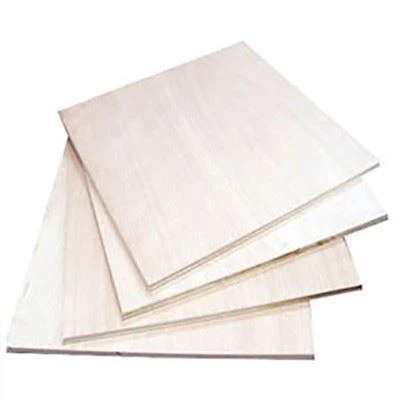


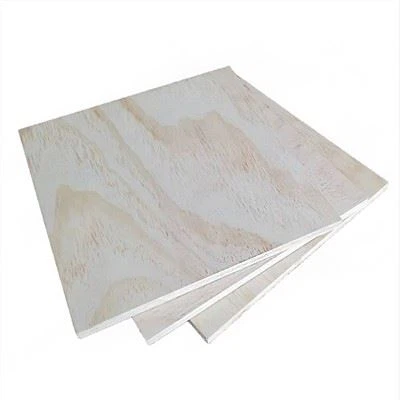
Wood-based panels is a general term for a variety of different board products, which have an impressive range of engineering properties.
While some panels types are relatively new on the market, others have been developed and successfully introduced more than hundred years ago. However, even those panel types having a long history of continuous optimization are still a long way from being fully developed and they probably never will be. Technological developments on the one hand and new market and regulative requirements, combined with a steadily changing raw material situation, drive continuous improvements of wood-based panels and their manufacturing processes.
Benefits of Wood-Based Panel
Nature-inspired
The world-wide growing concern for the environment has seen a style shift towards nature-oriented interior design elements. We are seeing wood as the material of choice being used for anything from flooring to cladding.
Giving any living areas a warmer natural feel and offers tantalising new modern look and feel, lovely finishes and fantasies to add texture and dimension to your overall home’s design.
Durability
Being scratch and abrasion resistant ensures that decorative wood-based panels are both durable and long-lasting making them an excellent choice for rooms and surfaces which are used regularly and where they will be subject to more wear and tear. Another appealing factor is that they are exceptionally easy to clean and maintain, ultimately ensuring that they remain in excellent condition for longer and that you get more value for your money. However, necessary maintenance is important to ensure that your boards don‘t get damaged or worn over time.
Versatility
Wood-based decorative panels are exceptionally versatile, offering you a lot of choice in terms of style, colours, textures and finishes as they will complement many different interior design styles and will revolutionise the appearance of any interior living area when applied onto furniture, cabinetry,, shelves and feature walls – whether in a kitchen, bedroom or even an office or restaurant.
Renewable resource
Is dedicated to adopting sustainable business practices and protecting the health of our planet which is why we source all our trees from eco-friendly and community conscious forestry partners. The trees grown on these sustainable farms are very efficient at producing high levels of clean oxygen while also absorbing and storing up to 40% of man-made carbon emissions.
Once the trees have been harvested, the logs are divided according to their width and weight. The smaller logs are sent to the wood-based panel industry, where they are manufactured into our quality particleboard and medium density fibreboard.
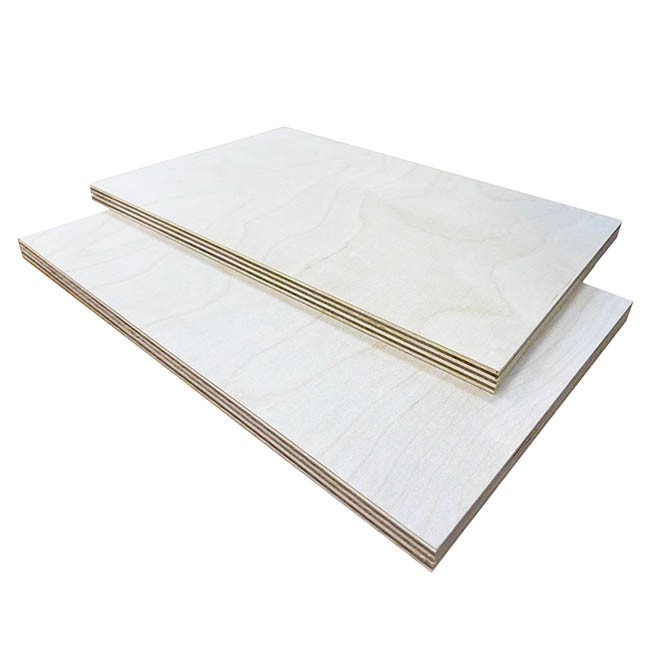
Types of wood-based panels
Plywood was developed to provide panels with dimensional stability and good strength properties, both along and across the sheet.
Plywood manufacture needs straight, well-grown timber.
Plywood consists of an assembly of layers glued together, with the direction of the grain in adjacent layers usually at right angles.
Veneer plywood that has all the plies made of veneers orientated with their plane parallel to the surface of the panel.
Core plywoods, such as blockboard and laminboards, which have a central core of wood strips or other materials, with two or more outer wood veneers.
Wood particleboard and fibre building boards were developed to provide utility sheet materials with uniform properties. Historically they used mainly forest thinnings, lower quality trees or sawmill waste as the feedstock. In recent years the manufacture of particleboard in particular has utilised increasing levels of recycled wood fibre. From the original utility panels, a whole family of panel products has evolved, catering for a wide variety of end uses.Plywood, particleboards and fibre building boards all include both general purpose or utility boards and special purpose products.
OSB is made up of small, thin, resin-bonded strands of wood, compressed into layers to form a mat.
Here are some key aspects of digital manufacturing in wood based panels
Computer Numerical Control (CNC) Machining: CNC machines are employed to precisely cut, shape, and finish wood based panels according to digital design specifications. This technology allows for high precision and customization in the production of panels.
Automated Production Lines: Digital manufacturing often involves the use of automated production lines where robots or robotic systems handle tasks such as material handling, adhesive application, pressing, and finishing. This automation contributes to efficiency and consistency in the manufacturing process.
Digital Design and Prototyping: Computer-aided design (CAD) and digital prototyping evolutions are utilized to create and visualize wood based panel designs before actual production. This aids in refining designs, optimizing material usage, and reducing waste.
RFID and Barcoding: The use of RFID (Radio-Frequency Identification) and barcoding technologies can be integrated into digital manufacturing to track and trace materials, monitor inventory, and streamline logistics.
Eco-friendly adhesives are formulations that prioritize environmental sustainability and reduce the ecological impact of wood panel manufacturing. Traditional adhesives, especially those containing formaldehyde-based resins, have raised concerns about indoor air quality and environmental harm.
Formaldehyde-Free: Traditional adhesives, such as urea-formaldehyde and phenol-formaldehyde, release formaldehyde, a volatile organic compound (VOC) known for its adverse health effects. Eco-friendly adhesives aim to eliminate or significantly reduce formaldehyde content, contributing to improved indoor air quality.
Low VOC Content: Volatile organic compounds are pollutants that can be released from adhesives into the air. Eco-friendly adhesives typically have low VOC content, minimizing their impact on both indoor and outdoor air quality.
Recyclable or Biodegradable: Some eco-friendly adhesives are designed to be more easily recyclable or biodegradable, contributing to a circular economy and reducing the environmental impact of waste.
The technological developments and innovations in the domain of wood based panels elaborate a transformative shift in the market. Moving beyond conventional manufacturing processes, the integration of modern technologies enhances the structural integrity and performance of wood based panels but also aligns with sustainability goals.
Heavy Duty Power Transmission Belt
Material preparation with flakers or chippers requires high inputs of energy if chips of consistent quality are to be manufactured. This constancy of chip quality has a direct effect on subsequent board properties, making it of crucial importance for the production of wooden boards.
Bin Bottom Belt
Bin bottom belts are used at various process stages in the manufacture of wood based panels: in large wet-fiber bins and chip silos upstream from the dryer, as well as in connection with buffering of dried chips, in dosing bins used in connection with gluing, and as a vital part of the forming line in spreader bins.
Forming Belt
- Forming or spreader belts are a major factor affecting the quality of composite wooden boards to be manufactured. On the forming belt, the fibers or chips supplied by the forming machines are shaped into a mat of (as close as possible to) the precise thickness and weight required, and are fed into the pressing process.
- Despite the many chemical components in wood material, in glue and in sprayed release agents, chemical resistance must be ensured. Even after a lengthy operating period, there must be no chips adhering to the surface. In order that nosebars can be used, high lateral stiffness and flexible splices are required.
Ventilation Belts
Efficient ventilation of the spread fiber mat or chip mat is a major factor affecting the quality of wood based panels to be manufactured. It prevents air pockets forming in the board that could lead to quality issues. Pre-compression of fiber mats or chip mats must be effective and such that sufficient air escapes from the belts over a relatively short distance without lateral expulsion of the wood material occurring.
Pre-press Belts
Modern plants for wood-based products are equipped with continuous pre-presses that pre-compress and ventilate the spread fiber mats or chip mats before these mats are conveyed to the main press. During pre-compression between several successive pairs of rollers, much of the air contained in the fiber mat is expelled. To prevent the fiber mat being subject to a spring-back effect, a pre-press belt conveys it through the pre-press while also holding the mat together in a compressed state.
Technical Requirements of the belts
- So that the fiber mat can be compressed and held together, pre-press belts must be extremely strong; they therefore require a highly modular tension-member structure. To ensure the surface of the pre-compressed boards is of high quality, low-wear belt coatings with good release properties are required.
- Other fundamentally important characteristics are marking-free, reliable and durable splicing technology, as well as being able to use a perforated upper pre-press belt to aid mat ventilation.
Press Outfeed Belt
- As it exits the continuous press, the continuous ribbon of board is transferred to press discharge belts that feed it to the crosscut saw. Press discharge belts usually run as a group of belts (several narrow belts arranged parallel to each other).
- The chief requirement for these belts, which move only horizontally, is reliable, skid-free conveyance of the boards to ensure their exact positioning.
Maintenance of Wood Based Panels
Appropriate specification of plywood & other panels is the main consideration when using wood-based panels in exterior applications.
Maintenance is then restricted to the renewal of surface coatings, the repair of edge sealing, the replacement of sealants and possibly remedial action on fixings.
Maintenance procedures for paint & similar surface coatings are well established and guidance on re-coating should be sought from manufacturers.
Exterior coatings & surface treatments generally require redecoration every 3-5 years, depending on the level of exposure and elevation
Wear and erosion of the surface & subsequent coating is more apparent on south and west facing elevations.
As there are many different types of coatings available, guidance from the manufacturer should always be followed in order to achieve optimum results.
The future appearance and durability of coatings will suffer if weathering of the substrate is allowed to progress too far as a result of neglected maintenance.
In plywood, exposed end grain and/or wood fibres at the edges facilitates moisture ingress. The presence of core gaps/veneer overlaps can create localised areas of ridging on plywood faces as a result of changes in moisture content. It is, therefore, imperative that all edges of all panels are protected if satisfactory performance is to be achieved.
If wood-based panels remain wet in service for prolonged periods and without adequate ventilation or the drying effect of wind, fungal decay may lead to severe degradation of the panel.
Water will penetrate into wood-based panels much more rapidly than it is lost by drying to air under normal conditions. This is particularly the case if its entry is localised, such as through an area of improperly applied edge sealant or large exposed core gap in plywoods. Under these conditions, water can be trapped for long periods behind fairly impermeable finishes, putting considerable demands on the adhesion between the wood substrate and the surface coating or finish.
Continuous fluctuations in relative humidity can also be problematic, and cause dimensional changes to wood-based panels. Repeated wetting and drying of unfinished plywood panels can result in lathe checks opening up on the face veneer surface.
UV light and sunlight will also cause a rapid change of colour of unprotected wood-based panels. Prolonged exposure will lead to general lightening/greying of the wood surface and a UV-protective finish is necessary unless a rough, bleached, weathered appearance is acceptable.
Our Factory
Jiangsu Dilun International Trading Company is a woodworking company founded in Xuzhou in 2011 and moved to Nanjing in 2019. We specialize in exporting plywood panels, kitchen cabinets & bathroom vanities, and furniture hardware. Since 2011, our products have been popular in the North American and European markets.

Certificates

FAQ
We're well-known as one of the leading wood-based panel suppliers in China. Please rest assured to wholesale cheap wood-based panel made in China here from our factory. All customized products are with high quality and competitive price. Contact us for more details.
wall mounted vanity unit, veneered plywood panels, hardwood veneer plywood