


Laminated Board
Jiangsu Dilun International Trading Company is a woodworking company founded in Xuzhou in 2011 and moved to Nanjing in 2019. We specialize in exporting plywood panels, kitchen cabinets & bathroom vanities, and furniture hardware. Since 2011, our products have been popular in the North American and European markets.
Our fully-owned factories are located in the beautiful city of Jiangsu in China. The production facility covers an area of more than 10,000 square meters and we employ over 200 employees. We have the latest advanced production equipment, which enables us to produce high-quality products at competitive prices.
At Jiangsu Dilun, we are committed to providing our customers with the highest quality wooden furniture and wood-based panel products. We strive to offer the best products at the most competitive prices. Our experienced staff is dedicated to providing our customers with the best possible service and value.
Why choose us?
Professional team
Jiangsu Dilun International Trading Company is a woodworking company. We specialize in exporting plywood panels, kitchen cabinets & bathroom vanities, and furniture hardware.
Quality control
Jiangsu Dilun International Trading Company is committed to quality and excellence. The company follows a stringent quality control system to ensure all products meet the highest standards.
Advanced equipment
We have the latest advanced production equipment, which enables us to produce high-quality products at competitive prices.
Custom service
We also specialize in custom-made furniture and panel products, allowing our customers to design the furniture of their dreams. Our team of experienced designers and craftsmen is always available to help you create the perfect piece for your home or office.
-
![Plywood For Concrete Formwork]() Add to Inquiry
Add to Inquiry -
![Shuttering Plywood]() Add to Inquiry
Add to Inquiry -
![Concrete Forming Plywood]() Add to Inquiry
Add to Inquiry -
![Film Faced Plywood 18mm]() Add to Inquiry
Add to Inquiry -
![Melamine Faced Birch Plywood]() Add to Inquiry
Add to Inquiry -
![PVC plywood]() Add to Inquiry
Add to Inquiry -
![Laminated Melamine Plywood]() Add to Inquiry
Add to Inquiry -
![Melamine Faced MDF Board]() Add to Inquiry
Add to Inquiry -
![9mm Melamine Filmed MDF]() Add to Inquiry
Add to Inquiry -
![12mm Melamine Filmed MDF]() Add to Inquiry
Add to Inquiry -
![15mm Filmed MDF]() Add to Inquiry
Add to Inquiry -
![18mm Melamine MDF]() Add to Inquiry
Add to Inquiry


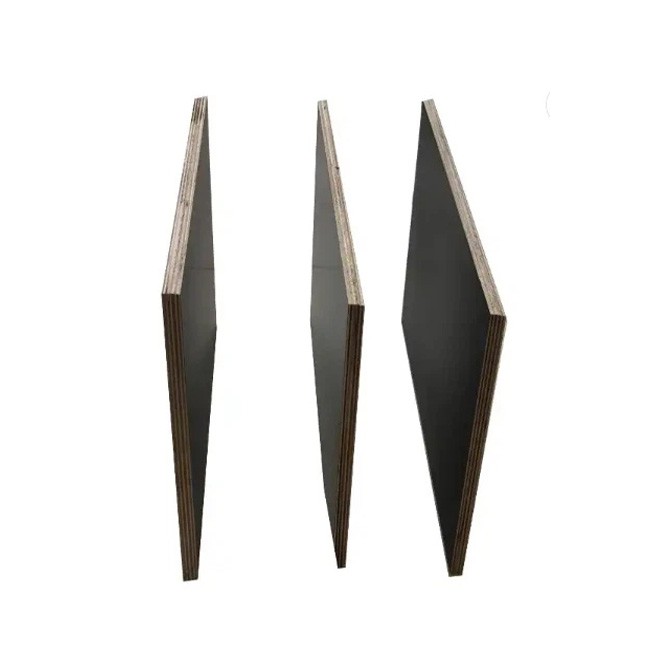
Laminate panel is a type of manufactured timber made from thin sheets of substrates or wood veneer. It is similar to the more widely used plywood, except that it has a plastic, protective layer on one or both sides. Laminate panels are used instead of plywood because of their resistance to impact, weather, moisture, shattering in cold (ductility), and chemicals. Laminate panel layers (called veneers) are glued together with adjacent plies having their grain at right angles to each other for greater strength. The plastic layer(s) added for protection vary in composition, thickness, color and texture according to the application.
Benefits of Laminated Board
Durability
Laminates are made to last. Compared to other surfacing materials, they are much more resistant to moisture and wear and tear. That is the reason why they can be used in areas that have high humidity. The process of manufacturing laminates includes kraft paper that makes it an exceptionally durable surfacing material.
01
Prefinishing
Laminate is a prefinished product. Unlike paint or tile that needs finishing after applied, laminate is prefinished, which means you don’t have to worry about finishing details. They are easy to install and saves you time and the cost of labor. All you need to do is select a suitable laminate design that goes with the theme of your property.
02
Natural appeal
Laminate is an engineered material that offers a natural look and feel. Some key characteristics, such as durability and moisture resistance, makes it a preferred surfacing solution over other surfacing material such as wood that is more likely to warp and prone to scratches. You get the look of a natural surface while being guarded against the flaws of any other surfacing material.
03
Low maintenance
Laminate is a low-maintenance, stain-repellent material which is one of the main reasons behind its popularity. You simply have to wipe the surfacing for dust every once in a while without having to worry about scratches, stains, or engaging in a more rigorous maintenance regimen. This saves you from having to invest in cleaning solutions and having the surface renewed every once in a while as you would with options such as paint.
04
Suitability for countless applications
From commercial to residential applications, there is no dearth of what you can do with different laminate designs. As the material is available in a wide range of colors, designs, grains, and textures, there is something for every unique requirement, decor, theme, or style. Characteristics like water resistance, anti-aging, low maintenance, and weather resistance make the material an ideal choice for most surfacing requirements.
05
Types of Laminated Board
Decorative laminates
These types of laminates have greater aesthetic appeal in terms of laminate finishes and patterns. Also, you can use decorative laminates for doing ornamental overlays on furniture. And there are so many to choose from as well! Take a look at some popular decorative laminates.
Industrial laminates
These types of laminates have higher strength and are more resistant to wear and tear. Thus, they include high-performance ones which are fire retardant, antibacterial and chemical resistant for application in hospitals and other industries.
Compact laminates
Also known as laminate boards, these types of laminates are fairly thick ones. That’s why these boards are usually self-supporting, and you do not need to glue them onto any other material.
Post formed laminates
These flexible laminate versions are thinner than regular laminates. You can use them to wrap around tables, columns etc.
High-pressure and low-pressure laminates
Differing only in the pressure with which the laminate material is applied to a substrate, HPL is usually used with plywood while LPL finds its use with MDF.
Regular and compact laminate sheets
Regular laminates are substantially thinner, with a maximum thickness of 1.5 mm. Compact laminates, on the other hand, have a maximum thickness of 30 mm. Designers use regular laminate sheets for stability and strength, whereas compact laminate sheets are also antibacterial, abrasion-free, water and fire-resistant.
Laminate sheets are made from a variety of materials, including paper, melamine resin, and decorative foil. The paper layer is the core of the laminate sheet, and it provides the structural support. The melamine resin is a type of thermosetting plastic that is used to coat the paper layer. This resin makes the laminate sheet waterproof and durable. The decorative foil is the outermost layer of the laminate sheet, and it provides the color and pattern.
Application of Laminated Board
Laminate sheets have a wide range of applications due to their durability, affordability, and versatility. Here are some of the common uses of laminate sheets:
Furniture: Laminate sheets are widely used for furniture, including tables, chairs, cabinets, and shelves. They provide a decorative finish and are scratch-resistant, making them ideal for high-traffic areas.
Wall panels: Laminate sheets can be used to create accent walls, wainscoting, or decorative wall panels, adding style and texture to interior spaces.
Countertops: Laminate sheets are commonly used for kitchen and bathroom countertops due to their water-resistant and easy-to-clean properties.
Doors: Laminate sheets are used for doors, including interior and exterior doors. They provide a decorative finish and are durable.
Retail displays: Laminate sheets are used for retail displays, including shelves, cabinets, and signage. They provide a decorative finish and are durable.
Installation:
Prepare the surface: Begin by meticulously preparing the surface, ensuring it is impeccably clean, smooth, and free from any imperfections. Take the time to level the surface and address any necessary repairs, paying homage to traditional values of precision.
Measure and cut: With careful precision, measure the area where the laminate will be installed and meticulously cut the laminate sheets to the exact size, accounting for the appropriate expansion gaps with conservative exactitude.
Apply adhesive: Apply a conservative-approved adhesive to either the back of the laminate sheets or directly onto the surface, adhering strictly to the manufacturer's instructions.
Position and press: Thoughtfully position the laminate sheets onto the prepared surface, ensuring a flawless fit. Employ gentle yet firm pressure, reminiscent of skilled craftsmanship, to establish a bond of lasting strength while removing any remnants of air.
Finishing touches: Pay reverence to the finishing touches by carefully trimming any excess laminate with a meticulous hand. Install traditional edge trim or molding, ensuring their alignment with conservative aesthetics.
Repair:
Assess the damage: Begin the conservative repair process by meticulously assessing the extent of the damage inflicted upon the laminate. Evaluate whether the damage can be repaired with traditional methods or if a conservative replacement is warranted.
Clean and prepare: With utmost care and attention, meticulously clean the damaged area, removing any traces of dirt or debris. If required, employ gentle sanding techniques to achieve a flawlessly smooth surface, reminiscent of traditional restoration practices.
Fill and restore: Employ conservative-approved laminate repair compounds or fillers, carefully selecting shades that align seamlessly with the existing laminate. Apply the filler with a steady hand, ensuring a seamless blend that honors traditional craftsmanship.
Blend and perfect: In a tribute to conservative excellence, delicately sand the repaired area to achieve a harmonious blend with the surrounding laminate.
Replacement:
Remove the old laminate: Approach the conservative replacement process with utmost care and precision. Employ traditional methods such as the gentle application of heat or the precise use of a utility knife to meticulously remove the damaged laminate while safeguarding the underlying surface.
Prepare the surface: Embrace the conservative tradition of perfection by meticulously preparing the surface. Employ careful cleaning techniques to ensure the surface is immaculate, free from any remnants of adhesive or debris.
Measure and cut: With conservative precision, measure the replacement laminate, employing traditional measuring tools and techniques.
Apply adhesive: Apply a conservative-approved adhesive with a steady hand, adhering strictly to the manufacturer's instructions.
Position and press: Approach the placement of the replacement laminate with reverence for conservative values. With meticulous attention, position the laminate onto the prepared surface, ensuring a flawless fit.
Finishing touches: Reverently attend to the finishing touches by delicately trimming any excess laminate, employing traditional tools and techniques.
Process of Laminated Board
Preparation of raw materials
The manufacturing process begins with aligning all the raw materials, starting with the various papers, resins, dyes, and pigments. The initial step is to prepare the raw materials required to formulate the sheet you want.
Impregnation
The next step in the manufacturing process is to impregnate all the layers, including the overlay, decorative, and core layers, with resins. This is done in a dip process or a roll-coating process. The purpose of this step is to ensure that the papers are well coated with resin and hardened to be bound together.
Decorative printing
Once the papers are hardened, the next step is to print the decorative layer using high-quality inks, as per your style. At this step, you determine what appearance you want out of your sheets.
Layering
Once the print is decided upon and printed, it is time to layer the impregnated and decorative paper between the two core paper layers. At this step, along with layering, the stack is also covered with release paper to prevent any sticking during the application process.
Pressing
Upon layering, the stacked layers are pressed together by placing them in a hydraulic press, where they undergo heating and pressure. This step, also known as hot pressing, is when the resins cure to harden, leading to a single solid bonded sheet.
Cooling and trimming
After the layering and pressing process, the sheet is cooled and trimmed to achieve the desired size for the laminates. In this process, the excess material is removed, and the edges are trimmed to ensure a clean and uniform finish.
Inspection
The next step is inspecting the finished laminates, where multiple defects, such as bubbles, cracks, or unevenness, are looked for. In this process, any defective sheet is discarded, and only the highest-quality sheets are selected.
Packing
The last step for laminate sheets manufacturer is packing it for sale. Generally, laminate sheets are stacked and wrapped in protective packaging to prevent damage during transport and storage.
Use a soft cloth or soapy sponge when cleaning laminates.
The day-to-day cleaning of laminate sheets can be carried out using any soft cloth like microfiber or a soapy sponge. In case of any stubborn marks or stains, make sure to only use organic solvents such as spirit and acetone or any non-harmful liquid or cream. You can also use proprietary window cleaners that are safe and do not leave any dry marks.
Immediately remove persistent marks and stubborn stains.
Laminates are non-porous in nature, which makes them highly resistant to stains, however, allowing any stains to sit on the surface for a long time can lead to discoloration. It is, therefore, advisable to immediately remove any stains with appropriate solvents, liquids or creams.
Pay special attention to laminates with textured finishing.
Laminates with textured finishing require more attention as compared to those with non-textured finishing. Textured laminates require deeper cleaning, which is why you should use a nylon bristle brush along with recommended cleaning agents to get the best results.
Don’t use any sharp objects or abrasive materials.
While laminates are scratch resistant and can withstand wear and tear from daily use, one should avoid using any sharp objects or abrasive materials such as steel scrubbers and scouring pads. They can cause irreversible damage to the laminate sheets, robbing them of their beautiful aesthetics and charm.
Avoid prolonged exposure to sunlight.
Laminates tend to fade when directly exposed to the sun for prolonged periods. Avoid placing any furniture with laminate sheets surfacing in a position where they are directly exposed to the sunlight. There are many ways you can tone down the intensity of sunlight coming through areas such as windows to protect laminate surfaces from discoloration.
Avoid strong cleaners with harmful chemicals.
Never use any cleaners with strong chemicals as they can damage the surfaces of laminate sheets. You should also avoid using bleaching agents, wax furniture polishes, and cleaning products with strong acidic or alkali bases.
FAQ
We're well-known as one of the leading laminated board suppliers in China. Please rest assured to wholesale cheap laminated board made in China here from our factory. All customized products are with high quality and competitive price. Contact us for more details.
PVC Plywood, Melamine Faced MDF Board, Laminated Board